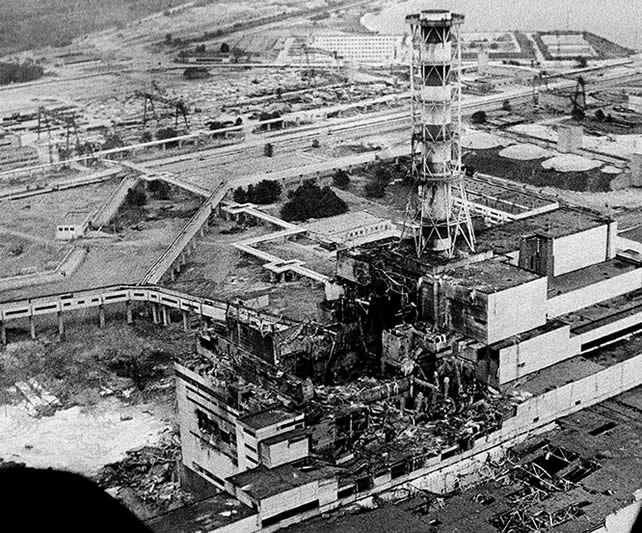
At 1:23 AM on April 26, 1986, reactor number four at the Chernobyl Nuclear Power Plant exploded with a force that blew the 1,000-ton reactor lid clean off its housing. It was the worst nuclear accident in human history — and the Soviet government’s first instinct was to lie about it.
Not just to the world. To its own people. To the firefighters it sent in without proper equipment. To the children still playing outside in radioactive rain.
This is the story of what actually happened at Chernobyl — and the cover-up that made everything worse.
What Caused the Explosion
The disaster began with a safety test gone catastrophically wrong.
Engineers at the plant were running a late-night experiment to test whether the reactor’s turbines could generate enough power to keep the cooling pumps running during a brief power outage. It was the kind of test that had been attempted before, always postponed, and was now being rushed through during a night shift with an inexperienced crew.
The reactor had been operating at low power for hours — an unstable and dangerous condition for the RBMK-1000 reactor design. When operators attempted to suddenly increase power output, the reactor became deeply unstable. A fatal combination of design flaws and human error sent the chain reaction spiraling out of control.
At 1:23:40 AM, two explosions ripped through reactor four in rapid succession. The first was a steam explosion. The second — which many scientists believe was a prompt criticality event, essentially a small nuclear explosion — blew the roof off the reactor building and sent a pillar of radioactive fire into the night sky.
The reactor core was now open to the atmosphere. Burning graphite and nuclear fuel were scattered across the roof of the plant. And the Soviet response machine began its work of minimizing, concealing, and denying.
The Cover-Up Begins
Within hours of the explosion, Soviet officials had a choice: tell the truth or contain the narrative. They chose containment.
The First Reports
Plant director Viktor Bryukhanov sent a telex to Moscow in the early morning hours significantly understating the radiation levels at the site. His reading: 3.6 roentgens per hour. The actual level in some areas: over 15,000 roentgens per hour. The difference between those numbers is the difference between a manageable incident and a civilization-threatening catastrophe.
Why the underreporting? The dosimeters capable of reading higher levels had been locked away. The ones available simply maxed out at 3.6 and were reported as accurate.
Moscow was told the reactor was intact. It was not. Moscow was told the situation was under control. It wasn’t.
The Firefighters
In the early hours of April 26, firefighters from Chernobyl and the nearby city of Pripyat were called to what they were told was a roof fire. They were not told they were walking into one of the most radioactive environments on earth.
They climbed onto the roof of the reactor building. They handled pieces of graphite from the reactor core with their bare hands — graphite so radioactive it caused radiation burns on contact. Many described a metallic taste in their mouths, a strange blue glow in the air above the reactor. Some reported feeling a pleasant warmth.
These were symptoms of acute radiation syndrome. Within days, the firefighters who had been closest to the core began to die. Twenty-eight of them perished in the weeks following the explosion from acute radiation syndrome — the first confirmed deaths directly attributed to the disaster.
They were heroes who were sent to their deaths without being told what they were facing.
Pripyat: 36 Hours of Silence
The city of Pripyat sat less than 3 kilometers from the reactor. Its 49,000 residents woke up on April 26 with no idea what had happened in the night.
Children went to school. Families went about their Saturday. A wedding was held. People walked through the streets as radioactive dust settled on everything around them.
Soviet officials knew the city needed to be evacuated immediately. But an evacuation would mean admitting the scale of the disaster. So they waited.
For 36 hours, Pripyat residents lived in radioactive contamination without being told. When the evacuation finally came on April 27, residents were told it would last three days. They left their belongings, their pets, their photo albums. Most never returned.
The city of Pripyat has been abandoned ever since.
The Wider Cover-Up
The deception extended far beyond the plant gates.
Sweden Blows the Secret
The Soviet Union’s information blackout might have continued indefinitely — but on April 28, workers at the Forsmark Nuclear Power Plant in Sweden began triggering radiation alarms. The contamination was traced back east, toward the Soviet Union.
Sweden demanded answers. The Soviet Union had no choice but to acknowledge that “an accident” had occurred at Chernobyl — two and a half days after the explosion. The announcement was 14 seconds long on Soviet state television.
The actual scale of the disaster was still not disclosed.
The May Day Parade
On May 1, 1986 — five days after the explosion — Kiev held its annual May Day parade. Kiev is 130 kilometers from Chernobyl. Radiation levels in the city were elevated. Children marched in the streets while officials watched from the stands.
The Ukrainian Communist Party chief had asked Moscow whether the parade should be cancelled. He was told it should proceed as normal. To cancel it would signal panic.
Parents who later learned what their children had been exposed to that day described their rage as something that never fully left them.
Health Data Suppression
In the years following the disaster, Soviet and later Ukrainian authorities systematically suppressed health data related to Chernobyl. Doctors were instructed not to list radiation exposure as a cause of death or illness. Research linking thyroid cancers in children to radioactive iodine contamination was buried.
The full human cost of Chernobyl remains contested to this day — a direct consequence of the information blackout that began on the night of the explosion.
The Liquidators
Between 1986 and 1990, an estimated 600,000 Soviet citizens were mobilized to contain the disaster. They became known as the liquidators.
They built the concrete sarcophagus that entombed the destroyed reactor. They cleaned radioactive debris from rooftops by hand when robots failed in the radiation. They drove vehicles through the exclusion zone. They buried contaminated topsoil.
Many were conscripted with little choice. Many were told the risks were minimal. Many received doses of radiation that would shorten their lives.
The Soviet government awarded liquidators medals and gave many of them certificates of honor. For years, the health consequences they suffered were denied, minimized, and covered up by the same state that had sent them in.
The True Death Toll
The official Soviet death toll from Chernobyl was 31. That number — two plant workers and 29 emergency responders — has never been seriously accepted by independent researchers.
The actual toll is genuinely unknown, and estimates vary enormously:
- The World Health Organization estimated approximately 4,000 eventual deaths from radiation-induced cancers among the most exposed populations
- The TORCH Report, commissioned by the European Greens, estimated between 30,000 and 60,000 cancer deaths
- Some researchers, including those from Greenpeace, have suggested figures in the hundreds of thousands when accounting for the full exposed population across Europe
The wide range exists because of one reason above all others: the systematic suppression of data that began on the night of the explosion and continued for years afterward.
The Legacy
Chernobyl did not just irradiate a region. It cracked the foundations of the Soviet Union.
Mikhail Gorbachev later said that the disaster was a turning point — that it exposed the rot at the heart of the Soviet system more clearly than any political event could have. The lies, the bureaucratic paralysis, the willingness to sacrifice ordinary people to protect the image of the state — Chernobyl put all of it on display.
The exclusion zone around Chernobyl remains in place today, covering approximately 2,600 square kilometers of northern Ukraine. The New Safe Confinement — a massive steel arch built over the original sarcophagus — was completed in 2016 to contain the still-radioactive ruins for the next century.
Reactor four continues to emit radiation. The corium — a lava-like mixture of melted nuclear fuel and reactor materials that burned through the floor of the reactor — sits somewhere in the basement of the building, still dangerous, largely unexplored.
The exact moment the Chernobyl disaster will be truly “over” is a question no scientist alive today will live to see answered.
Key Facts
- Date: April 26, 1986
- Location: Pripyat, Ukrainian SSR, Soviet Union
- Reactor: RBMK-1000, Unit 4
- Evacuation zone: 30km radius (eventually expanded)
- Liquidators: ~600,000 mobilized
- Official death toll: 31
- Exclusion zone: Still active today
- Cause: Design flaws + operator error during safety test
The full story of Chernobyl’s cover-up is even more disturbing in detail. Watch our complete breakdown on the GrimChronicleShow YouTube channel.