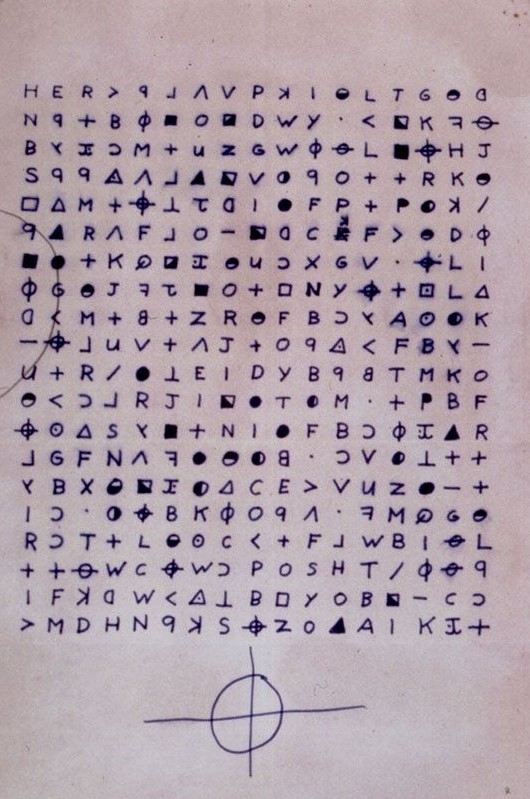
In the late 1960s, a killer stalked the roads and lovers’ lanes of Northern California. He didn’t just murder — he performed. He sent coded ciphers to newspapers, taunted police with cryptic letters, and gave himself a name that would echo through decades of true crime history: The Zodiac.
More than 50 years later, his identity remains officially unknown. No arrest was ever made. No conviction was ever secured. The Zodiac Killer is one of the most investigated cold cases in American history — and one of the most frustratingly unresolved.
This is everything we know.
The Confirmed Attacks
The Zodiac is officially linked to five murders and two survivors across four confirmed attacks. Investigators believe the true number may be higher — the killer himself claimed 37 victims — but these are the cases with solid evidence.
Attack 1: Lake Herman Road — December 20, 1968
David Faraday, 17, and Betty Lou Jensen, 16, were parked on Lake Herman Road in Benicia, California on a winter night. Someone approached their car and opened fire. Betty Lou was shot five times in the back as she fled. David was shot in the head at close range. Both died. No witnesses. No motive. No suspect.
This attack is considered the Zodiac’s first confirmed killing, though at the time, no one knew a serial killer had just begun his work.
Attack 2: Blue Rock Springs — July 4, 1969
Six months later and just a few miles away, Darlene Ferrin, 22, and Michael Mageau, 19, were parked at Blue Rock Springs Park in Vallejo. A car pulled up, left, then returned. A man approached and opened fire with a flashlight and pistol. Darlene was killed. Michael survived despite being shot multiple times.
Roughly an hour after the attack, Vallejo police received a phone call. A man calmly claimed responsibility for the shooting — and for the Lake Herman Road murders six months earlier. It was the first time the killer made contact.
Attack 3: Lake Berryessa — September 27, 1969
Bryan Hartnell and Cecelia Shepard were picnicking on the shores of Lake Berryessa in Napa County when a hooded figure approached them. The man wore a bib-like symbol on his chest — a crossed-circle design he would later use as his signature. He tied them up and stabbed both repeatedly. Cecelia died two days later. Bryan survived.
The attacker left a message on Bryan’s car door in marker: the dates of his previous attacks, written like a score. He then called police himself to report the crime.
Attack 4: Washington and Cherry — October 11, 1969
San Francisco cabdriver Paul Stine, 29, was shot in the head at point-blank range while stopped at a street corner in the Presidio Heights neighborhood. The killer wiped down the cab for fingerprints and tore off a piece of Stine’s shirt. That piece of shirt would appear in later letters as proof of authenticity.
Three teenagers witnessed the shooting from a nearby window. Their description — a white male, heavy build, crew-cut hair — became one of the only eyewitness accounts of the Zodiac in action.
The Letters
What made the Zodiac unlike most killers was his compulsion to communicate. Between 1969 and 1974, he sent at least 18 confirmed letters to newspapers, police, and attorneys. They ranged from taunting boasts to elaborate cryptograms — and they terrified the public.
The First Cipher Letters — August 1, 1969
Three weeks after the Blue Rock Springs attack, three nearly identical letters arrived simultaneously at the San Francisco Chronicle, the San Francisco Examiner, and the Vallejo Times-Herald. Each contained one-third of a 408-symbol cipher the killer claimed would reveal his identity.
He demanded the newspapers print the ciphers on their front pages — or he would “cruise around and pick off all stray people or couples that are alone.”
The papers complied.
The 408-cipher was solved within a week by a Salinas schoolteacher named Donald Harden and his wife Bettye. The message read, in part: “I like killing people because it is so much fun… I will not give you my name because you will try to sloi down or atop my collectiog of slaves for my afterlife.”
He never revealed his name.
The Zodiac Letter — August 7, 1969
In a follow-up letter to the Chronicle, the killer coined his own name for the first time: “This is the Zodiac speaking.” The letter included details only the real killer could know. The name stuck.
The 340-Cipher — November 8, 1969
The most famous unsolved cipher in American history arrived 51 years before it was cracked. A 340-symbol cryptogram mailed to the Chronicle resisted decades of expert cryptanalysis. It was finally decoded in December 2020 by a team of three amateur codebreakers: David Oranchak, Sam Blake, and Jarl Van Eycke. The solution required identifying a complex transposition route that ran diagonally across the cipher grid — something no prior analysis had correctly identified.
The message contained no name — just more taunting: “I hope you are having lots of fun in trying to catch me… I am not afraid of the gas chamber.”
The 13-Symbol Cipher — 1969
A short, 13-character cipher sent alongside other letters has never been solved. To this day it remains one of the few pieces of Zodiac correspondence without a confirmed solution.
The Timeline of Letters
Understanding the sequence of the Zodiac’s communications reveals a pattern investigators have studied for decades.
| Date | Communication | Key detail |
|---|---|---|
| Aug 1, 1969 | Three cipher letters (Z408) | Sent to three newspapers simultaneously |
| Aug 7, 1969 | “This is the Zodiac speaking” | First use of his self-given name |
| Oct 13, 1969 | Letter with Stine’s shirt | Proof of Paul Stine murder |
| Nov 8, 1969 | Z340 cipher | Not solved until 2020 |
| Apr 20, 1970 | “I am the Zodiac” with bus bomb threat | Claimed 10 victims |
| Jun 26, 1970 | Letter with map | Claimed bomb in school |
| Jul 24, 1970 | “Zodiac” letter | Referenced Mikado |
| Mar 22, 1971 | Letter to LA Times | Last confirmed letter for 3 years |
| Jan 29, 1974 | “Exorcist” letter | Last confirmed Zodiac letter |
After January 1974 — silence. The letters stopped. The Zodiac was never heard from again.
The Main Suspects
Over the decades, dozens of men have been named as suspects. A handful have attracted serious investigative attention.
Arthur Leigh Allen
The most famous and most investigated suspect, Arthur Leigh Allen was a convicted child molester and former schoolteacher from Vallejo with a deeply unsettling connection to the case. He owned a Zodiac-brand watch with the crossed-circle symbol. He used the term “slaves” in conversation. A witness placed him near Lake Berryessa on the day of the attack.
Allen was interviewed multiple times by police and investigated intensely. His home and trailer were searched. Handwriting analysts compared his writing to the Zodiac letters. Fingerprints were compared to prints found at the Stine crime scene.
Nothing conclusively matched. Allen died of a heart attack in 1992, having never been charged. DNA recovered from the Zodiac’s letters did not match Allen’s DNA.
He remains the most popular suspect — and officially unproven.
Gary Francis Poste
In 2021, a cold case team called the Case Breakers publicly named Gary Francis Poste, a house painter who died in 2018, as the Zodiac Killer. They claimed facial reconstruction comparisons and anagram evidence pointed to Poste. The FBI did not validate the claim. San Francisco police said it did not change their investigation.
Lawrence Kane
Another long-investigated suspect, Kane was connected to Darlene Ferrin through circumstantial evidence and was known to have been in the areas of several attacks. Like Allen, he was never charged.
The DNA Evidence: More Complicated Than Most People Know
This is the part of the Zodiac case that gets the least attention — and deserves the most.
DNA was recovered from the back of stamps and envelope flaps on Zodiac letters. In theory, this should have solved everything. In practice, it has created as many problems as it resolved.
What we actually have:
The San Francisco Police Department has confirmed that a partial male DNA profile was extracted from the letters. The profile is incomplete — meaning it cannot definitively include or exclude suspects on its own. It can only be used in combination with other evidence.
The Arthur Leigh Allen problem:
When Allen’s DNA was tested against the profile recovered from the letters, it did not match. This is widely cited as proof Allen was not the Zodiac. But investigators have raised a legitimate complicating factor: the letters passed through many hands before being properly preserved — postal workers, newspaper editors, police officers. The DNA on the stamps may not belong to the Zodiac at all. It may belong to someone who simply handled the envelope.
The genealogical DNA possibility:
The technology that identified the Golden State Killer in 2018 — uploading a crime scene DNA profile to genealogical databases like GEDmatch and working backward through family trees — has been discussed in connection with the Zodiac case.
The problem: the Zodiac’s partial profile may not be complete enough for this method to work reliably. Genealogical DNA matching requires a reasonably complete profile to narrow the family tree to a manageable number of candidates. An incomplete profile produces too many potential matches to be useful.
The SFPD has not publicly confirmed whether they have attempted this approach. Investigators close to the case have suggested privately that the profile quality remains the central obstacle.
The bottom line on DNA:
The DNA evidence is neither the smoking gun it’s sometimes portrayed as nor the dead end skeptics suggest. It sits in an uncomfortable middle ground — real, potentially useful, but currently insufficient to name a killer.
The Ciphers: What Was Solved and What Wasn’t
| Cipher | Symbols | Status |
|---|---|---|
| Z408 | 408 | Solved — 1969, by Donald and Bettye Harden |
| Z340 | 340 | Solved — December 2020, by David Oranchak, Sam Blake, Jarl Van Eycke |
| Z13 | 13 | Unsolved |
| My Name cipher | 32 | Unsolved |
The Z340’s 2020 solution was a major breakthrough — 51 years after the letter was sent. The solving team spent years developing custom software to test transposition routes. The solution required reading the cipher in a diagonal pattern that no previous analysis had correctly identified. But the message contained no name. Just more taunting from a killer who seemed to enjoy the game more than anything else.
Why Was He Never Caught?
The Zodiac case fell apart for a combination of reasons that investigators have dissected for decades.
Jurisdictional confusion was a major factor. The attacks happened across multiple counties — Solano, Napa, and San Francisco — each with separate police departments that initially failed to share information effectively. By the time a coordinated task force existed, critical early investigation time had been lost.
The DNA problem is perhaps the most frustrating — as detailed above. A partial profile exists but remains insufficient for definitive identification.
The letters stopped. After 1974, the Zodiac went silent. Whether he died, moved, was imprisoned for another crime, or simply stopped is unknown. Several researchers have noted that the apparent end of the letters correlates with the incarceration of certain suspects — but no definitive connection has ever been established.
The eyewitness descriptions conflicted. Different survivors described someone slightly different each time, making a composite portrait unreliable.
The Case Today
The Zodiac case remains officially open with the San Francisco Police Department. DNA technology continues to improve — the same advances that cracked other cold cases through genealogical DNA databases could theoretically identify the Zodiac if a relative’s DNA is ever uploaded to a public database and if the existing profile is complete enough to work with.
The Z340 cipher’s 2020 solution proved that progress is still possible. Investigators and amateur researchers continue to work the case.
The crossed-circle. The coded letters. The taunting calls to police. Whoever the Zodiac was, he constructed one of the most enduring mysteries in criminal history — and so far, it remains exactly that.
Key Facts
- Confirmed victims: 5 dead, 2 survivors
- Claimed victims: 37 (unverified)
- Active period: 1968–1974 (letters)
- Location: Northern California (Solano, Napa, San Francisco counties)
- Status: Officially unsolved
- DNA: Partial profile exists — insufficient for definitive identification
- Z408 solved: 1969 (Donald and Bettye Harden)
- Z340 solved: December 2020 (David Oranchak, Sam Blake, Jarl Van Eycke)
- Z13: Unsolved
Sources & Further Reading
- Graysmith, Robert. Zodiac (1986) — the foundational investigation by a San Francisco Chronicle cartoonist who worked the case in real time
- Oranchak, David. ZodiacKillerCiphers.net — the most comprehensive ongoing analysis of the Zodiac’s cryptograms
- California Department of Justice — official case files (partially declassified)
- San Francisco Police Department — Zodiac case file (officially open)
- FBI FOIA documents on the Zodiac investigation (available via FBI Vault)
- Hartnell, Bryan — survivor testimony, multiple published interviews
- San Francisco Chronicle archives, 1969–1974 — original letter publications
- Fincher, David (dir.). Zodiac (2007) — dramatization notable for its research accuracy; Graysmith served as consultant
Have a theory about the Zodiac’s identity? The case file is still open — and so is the debate. Watch our full breakdown below: