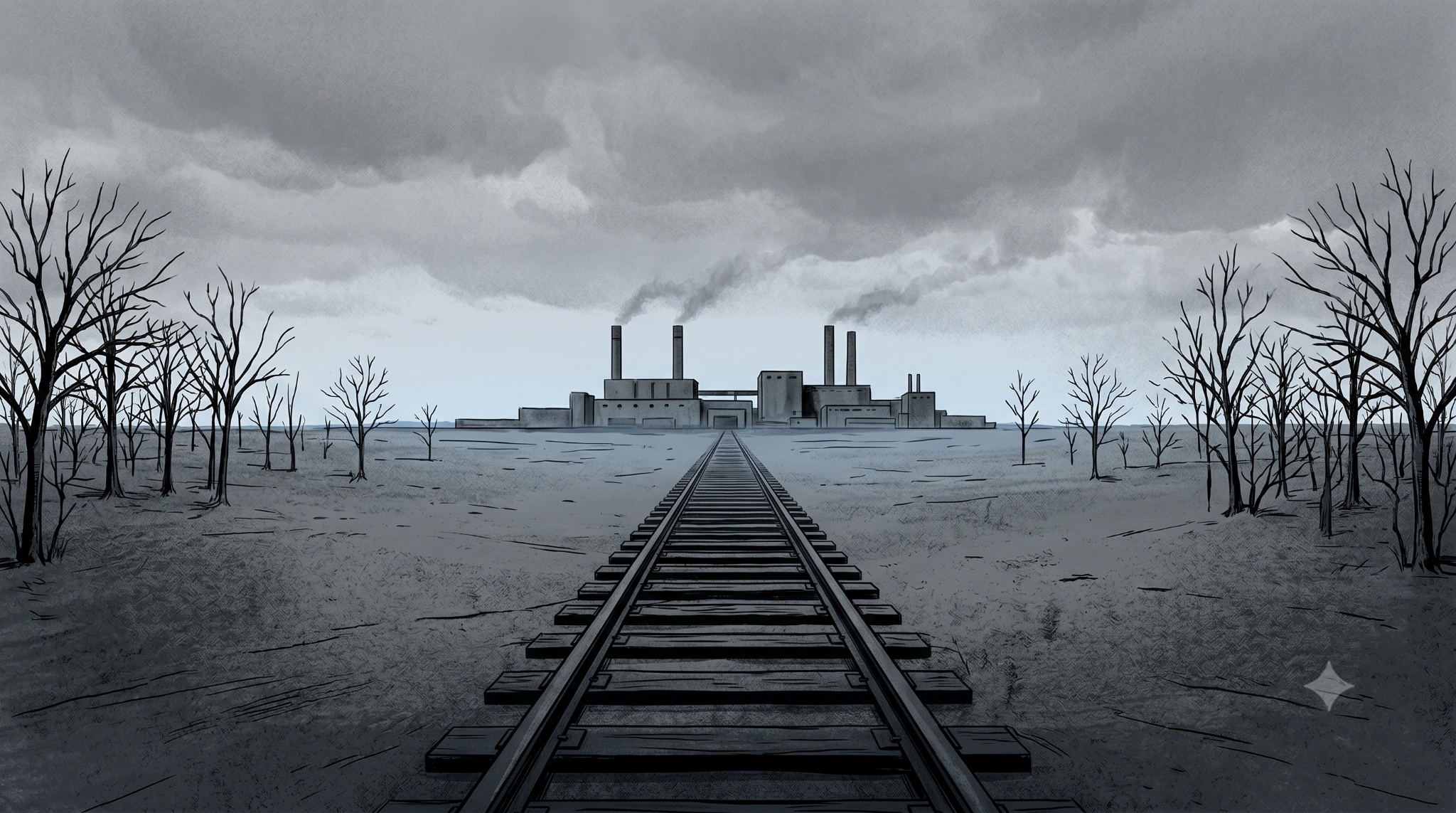
In a sealed military compound outside Harbin, in the Japanese-occupied region of Manchuria, a facility operated for nearly a decade under the bureaucratic name “Epidemic Prevention and Water Purification Department of the Kwantung Army.” Inside, thousands of people — Chinese civilians, Soviet and Mongolian prisoners, Korean detainees, and an unknown number of others — were used as subjects in experiments that included deliberate infection with plague, cholera, and anthrax; vivisection without anesthesia; and frostbite testing that left limbs blackened and rotting.
When Japan surrendered in August 1945, the facility’s commander and senior staff did not stand trial for these acts at the International Military Tribunal for the Far East — the Tokyo Trials, the Pacific equivalent of Nuremberg. Instead, declassified documents released decades later confirm that American occupation authorities granted them immunity in exchange for the data their experiments had produced.
This is the story of Unit 731 — and of the deal that followed it.
Origins: Shiro Ishii and the “Prevention” Program
The man most closely associated with the unit was Shiro Ishii, a Japanese Army surgeon and microbiologist who, in the early 1930s, became a vocal advocate within the Imperial Japanese Army for the development of biological weapons — arguing that international agreements like the 1925 Geneva Protocol, which prohibited the use (though notably not the development or stockpiling) of biological and chemical weapons, made such weapons attractive precisely because most major powers had publicly committed not to use them, reducing the likelihood of retaliation in kind.
Following Japan’s establishment of the puppet state of Manchukuo in occupied northeastern China in 1932, Ishii was given the resources to build a research facility. Construction of the main complex at Pingfang, roughly 24 kilometers south of Harbin, began in the mid-1930s, with the facility becoming fully operational around 1936. It operated under a series of cover names, most commonly referred to by the shorthand designation “Unit 731” from 1941 onward.
The Pingfang complex was enormous by the standards of the time: contemporary accounts and post-war investigations describe a compound covering several square kilometers, including laboratories, a prison block, an airfield, a power plant, and crematoria — designed to be self-contained and largely invisible to the surrounding population, who were told it was a lumber mill or water purification plant.
The “Maruta”
People held at Pingfang for experimentation were referred to internally by staff using the Japanese word “maruta” — literally, “logs.” Former unit members who later gave testimony, including in interviews conducted decades after the war, described the term as both a literal cover story (visitors were told the facility processed lumber) and a dehumanizing internal shorthand that staff used to refer to living test subjects.
The population held at Pingfang and its satellite facilities consisted predominantly of Chinese civilians and prisoners, along with Soviet prisoners (particularly during periods of border conflict with the USSR), Korean detainees, and smaller numbers of Mongolian prisoners and others. Some testimony and documentation also describes the presence of small numbers of other Allied nationals at various points, though the overwhelming majority of documented victims were Chinese.
Estimates of the total number of people who died as direct test subjects within the Pingfang facility itself — as opposed to the much larger number who died from field deployment of biological weapons, discussed below — are typically cited in the range of 3,000, based primarily on capacity estimates of the facility’s prison block and testimony from former staff, though no complete victim registry has ever been recovered; much of the unit’s documentation was deliberately destroyed in the final days of the war.
The Experiments
What follows is necessarily a partial account. The categories below are drawn from post-war testimony — including testimony given by former Unit 731 personnel themselves, both at the 1949 Soviet trial discussed later and in subsequent interviews conducted by journalists and historians from the 1980s onward — and from the limited surviving documentary record.
Vivisection
Multiple former unit members have given first-person testimony, published in works including Hal Gold’s Unit 731 Testimony (1996), describing live dissections performed without anesthesia on prisoners — procedures the unit’s research staff justified internally as necessary because anesthesia was believed to alter the physiological responses being studied, including the progression of infections, the function of organs under disease conditions, and the body’s response to battlefield-type wounds inflicted experimentally.
These accounts, given by men describing their own actions decades later, are among the most extensively corroborated aspects of the unit’s activities, precisely because they come from direct participants rather than from victims (almost none of whom survived to testify) or from documents (most of which were destroyed).
Frostbite Research
Under researcher Hisato Yoshimura, the unit conducted extensive frostbite experimentation — exposing prisoners’ limbs to subfreezing temperatures, sometimes for extended periods in outdoor conditions during the Manchurian winter, and then testing various rewarming methods (including immersion in water at different temperatures) to determine which produced the best tissue outcomes, with the stated goal of developing frostbite treatment protocols for Japanese soldiers on the Manchurian and Soviet fronts. The experiments frequently resulted in severe tissue damage, gangrene, and amputation of the affected limbs in subjects who survived the initial procedure.
Infectious Disease Weaponization
A significant portion of the unit’s work focused on cultivating and weaponizing pathogens, including Yersinia pestis (plague), Vibrio cholerae (cholera), Bacillus anthracis (anthrax), and Salmonella typhi (typhoid).
Prisoners were deliberately infected with these pathogens — through various exposure methods including ingestion, injection, and aerosol — both to study the progression of disease in humans (information that, at the time, was largely unavailable through any ethical research method) and to test the viability of these pathogens as weapons.
The unit developed specialized munitions, sometimes referred to in surviving records as “Uji bombs” — ceramic-cased bombs designed to disperse plague-infected fleas without the heat of a conventional explosion, which would kill the fleas and destroy their effectiveness as disease vectors.
Pressure and Physiological Limit Testing
Testimony also describes experiments using pressure chambers to determine the point at which human bodies would suffer fatal injury from rapid decompression — research with a stated application to aircrew safety — as well as testing of weapons including grenades and firearms on live human subjects at varying ranges to study wound patterns.
Beyond the Walls: Field Deployment
Unit 731’s activities were not confined to the Pingfang complex. The unit and affiliated units conducted what amounted to field trials of biological weapons against Chinese civilian populations, primarily during military campaigns in central China from 1940 onward.
The best-documented of these involved the deliberate contamination of water supplies and food, and the aerial dispersal of plague-infected fleas, in and around cities including Ningbo (1940) and Changde in Hunan province (1941), among others. Following these operations, Chinese and later international researchers documented outbreaks of plague in affected areas that were atypical in their location and timing compared to the historical pattern of naturally-occurring plague in the region — a key piece of evidence cited in subsequent assessments of the unit’s field operations.
Estimating the total death toll from these field operations is far more difficult, and far more contested, than estimating deaths within the Pingfang facility itself. Because biological weapons deployed against a civilian population produce effects — disease outbreaks — that are difficult to distinguish retrospectively from naturally-occurring epidemics, and because comprehensive records were not kept (or were destroyed), historians have produced a very wide range of estimates. Figures cited in different historical works for the total death toll attributable to Unit 731’s activities, including field deployments, range from the low tens of thousands to figures exceeding 200,000 — a range reflecting genuinely different methodologies and source bases rather than a simple consensus-vs-outlier situation. Grim Chronicle presents this range rather than a single figure because no single figure commands the kind of broad scholarly consensus that would justify treating it as settled.
The End of the War — and the Cover-Up
As Soviet forces advanced into Manchuria in August 1945, Unit 731 personnel were ordered to destroy the Pingfang facility. Surviving accounts describe the demolition of laboratory buildings, the destruction of documentation, and — according to multiple post-war accounts — the killing of remaining prisoners held at the facility prior to its abandonment, to eliminate witnesses.
Ishii and the bulk of the unit’s senior staff returned to Japan in the chaotic weeks following the surrender. Unlike many senior Japanese military and political figures, none of Unit 731’s leadership was indicted at the Tokyo Trials, which ran from 1946 to 1948 and prosecuted Japanese leaders for crimes including conventional war crimes and crimes against peace.
The absence of any prosecution of Unit 731’s biological warfare program from the Tokyo Trials — at a tribunal that was, in other respects, prosecuting comparable conduct by Japanese forces — was, for decades, either unexplained in mainstream historical accounts or attributed vaguely to the difficulty of obtaining evidence. Declassified documents released from the 1980s onward provided a more specific explanation.
The Immunity Deal
Beginning in the late 1940s, and substantially expanded through document releases following the U.S. Congress’s Japanese Imperial Government Disclosure Act of 2000 (a companion to earlier Nazi-focused disclosure legislation), historians gained access to a body of U.S. military and intelligence correspondence documenting negotiations between U.S. occupation authorities — operating under General Douglas MacArthur’s command — and former Unit 731 personnel, including Ishii himself.
The documented arc of these negotiations, examined in detail in Sheldon Harris’s Factories of Death: Japanese Biological Warfare, 1932-45, and the American Cover-up (1994, revised 2002) — widely regarded as the foundational English-language scholarly account — shows that U.S. authorities, primarily through intermediaries including Lieutenant Colonel Murray Sanders and later Dr. Norbert Fell of the U.S. Army’s biological warfare program at Camp/Fort Detrick, sought access to the human experimentation data Unit 731 had produced — data that, because it derived from experiments on living humans, was considered scientifically valuable in a way that could not be replicated through ethical research, and which U.S. officials were also concerned might otherwise fall into Soviet hands.
In exchange, according to the documented correspondence, Ishii and his senior colleagues were granted immunity from prosecution for their roles in the program. A 1947 memo from a U.S. official involved in the negotiations, cited extensively in subsequent historical scholarship, explicitly weighed the value of the data against the political cost of prosecution and recommended immunity.
No member of Unit 731’s senior leadership was ever tried by an Allied tribunal for the unit’s activities. Shiro Ishii died of laryngeal cancer in 1959, having faced no legal consequences.
The Khabarovsk Trial — The Soviet Exception
While Unit 731’s leadership avoided Allied prosecution, the Soviet Union did conduct a war crimes trial directly addressing the unit’s activities. In December 1949, the Soviet military tribunal in Khabarovsk tried 12 former Japanese military personnel — including several former Unit 731-affiliated officers who had been captured by Soviet forces in Manchuria in 1945 (and were therefore in Soviet, not American, custody) — on charges related to the preparation and use of bacteriological weapons.
All 12 defendants were convicted, receiving sentences ranging from 2 to 25 years in Soviet labor camps; none received a death sentence. Most of the convicted individuals were repatriated to Japan by the mid-to-late 1950s after serving reduced terms.
For decades, the Khabarovsk trial was widely dismissed in the West as Soviet propaganda — a characterization driven partly by Cold War dynamics and partly by the fact that the trial’s proceedings described activities (organized biological weapons human experimentation on a large scale) that the U.S. government, at the time, was not acknowledging and indeed had specific reason not to corroborate publicly, given its own arrangement with Ishii. Subsequent scholarship, drawing on the declassified U.S. documents described above as well as Japanese-language testimony collected independently, has found that the core factual claims made at Khabarovsk regarding the existence and nature of the unit’s biological warfare program were substantially accurate, even though the trial itself, as a Soviet legal proceeding during this period, is not regarded by historians as having met contemporary standards of due process.
The 2002 Tokyo District Court Case
In 2002, a group of Chinese plaintiffs — survivors and family members of victims from the Ningbo and other affected areas — brought a civil suit against the Japanese government in the Tokyo District Court, seeking acknowledgment and compensation for harm caused by Unit 731’s biological warfare activities.
The court’s August 2002 ruling is notable for two distinct findings that are sometimes conflated in popular accounts. First, the court made factual findings acknowledging that Unit 731 had existed, had conducted the biological warfare activities alleged, and that the plaintiffs’ communities had suffered the harms described — a judicial acknowledgment, by a Japanese court, of facts the Japanese government had not officially confirmed in comparable terms. Second, and separately, the court denied the plaintiffs’ claim for compensation, on legal grounds related to the statute of limitations and the doctrine of state immunity for wartime conduct under the legal framework applicable at the time — grounds that did not depend on, and did not disturb, the court’s factual findings.
This combination — judicial acknowledgment of the underlying facts, paired with denial of the specific legal remedy sought, on procedural rather than factual grounds — has been a recurring pattern in litigation related to Japanese wartime conduct, and is frequently misreported in either direction: as either “the court ruled it didn’t happen” (incorrect — the court found that it did) or “the court ruled Japan was liable” (also incorrect — the court denied the compensation claim).
Where the Site Stands Today
The Pingfang site, much of which was destroyed by retreating Japanese forces in 1945, has been preserved and developed as a memorial and museum — the Exhibition Hall of Evidence of War Crimes Committed by Unit 731, located in Harbin’s Pingfang District. The museum underwent a significant expansion completed around 2015, and includes preserved structural remains of the original complex alongside exhibits drawing on surviving documentation, archaeological work at the site, and testimony from former unit members and from individuals affected by the unit’s field operations.
The unit’s history remains a point of significant contention in Japan-China relations, and has been a recurring subject in debates over how Japanese wartime conduct is presented in school curricula in Japan — debates that mirror, in some respects, similar controversies regarding the historical treatment of other aspects of Japan’s wartime record in the Pacific.
What Can Be Said With Confidence
The existence of Unit 731, its location at Pingfang, its program of lethal human experimentation on prisoners including Chinese, Soviet, Korean, and Mongolian nationals, and its development and field use of biological weapons against Chinese population centers, are established historical facts, supported by surviving documentary evidence, first-person testimony from former unit members, archaeological investigation at the Pingfang site, and — for the field deployment of biological weapons — epidemiological evidence of anomalous disease outbreaks corroborated by independent researchers.
What remains genuinely disputed among historians is the precise scale — particularly the total death toll attributable to field operations, where the absence of records and the inherent difficulty of distinguishing weapon-caused outbreaks from natural ones leaves a wide range of scholarly estimates. Also undisputed, but perhaps less widely known than the underlying atrocities themselves, is the fact that the people most directly responsible were never tried by the Allied powers that otherwise conducted an extensive war crimes process against Japan — a decision made, according to the documentary record, in direct exchange for the data their crimes had produced.
Key Facts
- Location: Pingfang complex, ~24 km south of Harbin, Manchukuo (occupied northeast China)
- Operational: Approximately 1936-1945
- Commander: Surgeon General Shiro Ishii (died 1959, never prosecuted)
- Victims at Pingfang: Commonly estimated around 3,000 (no complete registry survives)
- Field operation death toll: Disputed; published estimates range from tens of thousands to over 200,000
- Tokyo Trials (1946-48): Unit 731 leadership NOT indicted
- Khabarovsk Trial (Dec 1949): 12 Japanese personnel convicted by Soviet tribunal, sentences 2-25 years
- U.S. immunity arrangement: Documented in declassified records released following the Japanese Imperial Government Disclosure Act of 2000
- 2002 Tokyo District Court: Acknowledged historical facts of Unit 731’s activities; denied compensation on statute-of-limitations/state immunity grounds
- Memorial site: Exhibition Hall of Evidence of War Crimes Committed by Unit 731, Harbin (major expansion completed ~2015)
Sources & Further Reading
- Harris, Sheldon H. Factories of Death: Japanese Biological Warfare, 1932-45, and the American Cover-up (1994, rev. 2002) — the foundational English-language scholarly account, drawing on declassified U.S. records
- Gold, Hal. Unit 731 Testimony (1996) — first-person accounts from former unit members
- Barenblatt, Daniel. A Plague Upon Humanity: The Secret Genocide of Axis Japan’s Germ Warfare Operation (2004)
- U.S. National Archives — declassified records released under the Japanese Imperial Government Disclosure Act of 2000
- Khabarovsk War Crimes Trial proceedings (December 1949) — Soviet military tribunal records
- Tokyo District Court ruling, August 27, 2002 — civil case brought by Chinese plaintiffs regarding biological warfare claims
- Williams, Peter and Wallace, David. Unit 731: Japan’s Secret Biological Warfare in World War II (1989)
- Exhibition Hall of Evidence of War Crimes Committed by Unit 731, Harbin — museum documentation and site archaeology reports
The men who ran Unit 731 walked away from the war without facing a single tribunal for what happened at Pingfang. Watch our full breakdown on the GrimChronicleShow YouTube channel.